MOST SCHOOLS TEACH A SLICE
AND CALL IT THE WHOLE.
Walk into twenty martial arts schools and you hear the same sentence. We teach a system. The word sits in the bio, in the welcome video, on the wall. Then class begins. What gets taught is a slice. A boxing slice. A jiu-jitsu slice. A self defense slice that has not been pressure tested since the eighties. The word "system" did the work of marketing. The curriculum stayed a single discipline in a building with mats.
A slice is not a system. The coach can be the best in the region at it. A student can spend ten years inside it and come out a serious practitioner of one thing. That does not make the slice connect to anything else. A jab thrown by a boxer who has not grappled stops being a jab the moment a takedown starts. The slice teacher tells the student to cross train. The student now has two slices and no map.
The MMA gyms tried to fix this by putting four coaches in one building. Boxing Monday. Wrestling Tuesday. Jiu-jitsu Wednesday. A combined session on Friday. Better than one slice. Not a system. Four slices sharing rent. The transitions, where fights are won and lost, become a fifth thing the student figures out on their own time. The synthesis that should have been the gym's job becomes the student's homework. When the student leaves, the synthesis leaves with them.
Software did not fix it. Every modern gym now has an app. Most apps are point of sale tools in methodology costumes. They book the class, sell the membership, track attendance. The methodology lives in the head of whichever coach is on the floor. Open an app gym product and scroll. Videos sorted by belt, by category, by coach. The armbar video does not know which mount video preceded it. The student gets a library and a search bar. A student who watches every video still has a folder of videos, not a method.
A student who notices this asks a reasonable question. Where is the system. What technique leads to what. What beats what. How a defense becomes a counter. Which way the feet are moving while the hands work. The student wants a map. The school sells a slogan.
The teaching layer has its own failure. Curriculum in most schools is a folder of techniques organized by belt. Belt one knows forty things. Belt two knows sixty. The list is a sequence, not a map. Two students at the same belt can have memorized the same forty techniques. They still cannot fight each other in a way that resembles a real exchange. No one taught them how the pieces talk to each other.
A quieter failure sits underneath. Most schools do not teach defense as a layer. Defense gets a unit. A Saturday class. A February block. The result is a student whose offense is fluent and whose defense is rehearsed. The cost shows up the first time they get pressure tested. They eat a punch. Their hands come up late. Their feet stop. The combination they had been drilling for months vanishes. The coach calls it a confidence problem. It is a curriculum problem.
The honest version is this. Most schools teach a discipline well. They do not pretend to themselves to be teaching a connected method. The marketing department writes "system" on the brochure because the word sells. The coach on the floor knows the word is generous. The student finds out a year in.
A real system would treat striking, clinch, takedown, and ground as four sections of one map. It would draw the transitions with the same care as the positions. It would teach defense as a layer woven through every range. It would constrain itself. The list of relationships between techniques is small and designed, not infinite and improvised. A real system can be drawn. A drawn system can be trained. A trained system can be measured. A measured system can be sharpened. Building it is hard, slow, and pays nothing for years.
TRITAC spent twenty five years inside the field, training under multiple lineages, teaching adults, watching what worked and what failed under pressure. The decision to build the map was a decision to stop waving at the word. The rest of this page is the work the word was meant to describe.
THE SYSTEM CONNECTS RANGE TO RANGE,
OLD TO NEW, LOCAL TO NETWORK.
A system is the set of relationships it draws between the pieces. TRITAC draws three. Range to range. Old to new. Local to network. Each is a discipline of its own. The three together make the method everything else on this page sits on.
Range to range
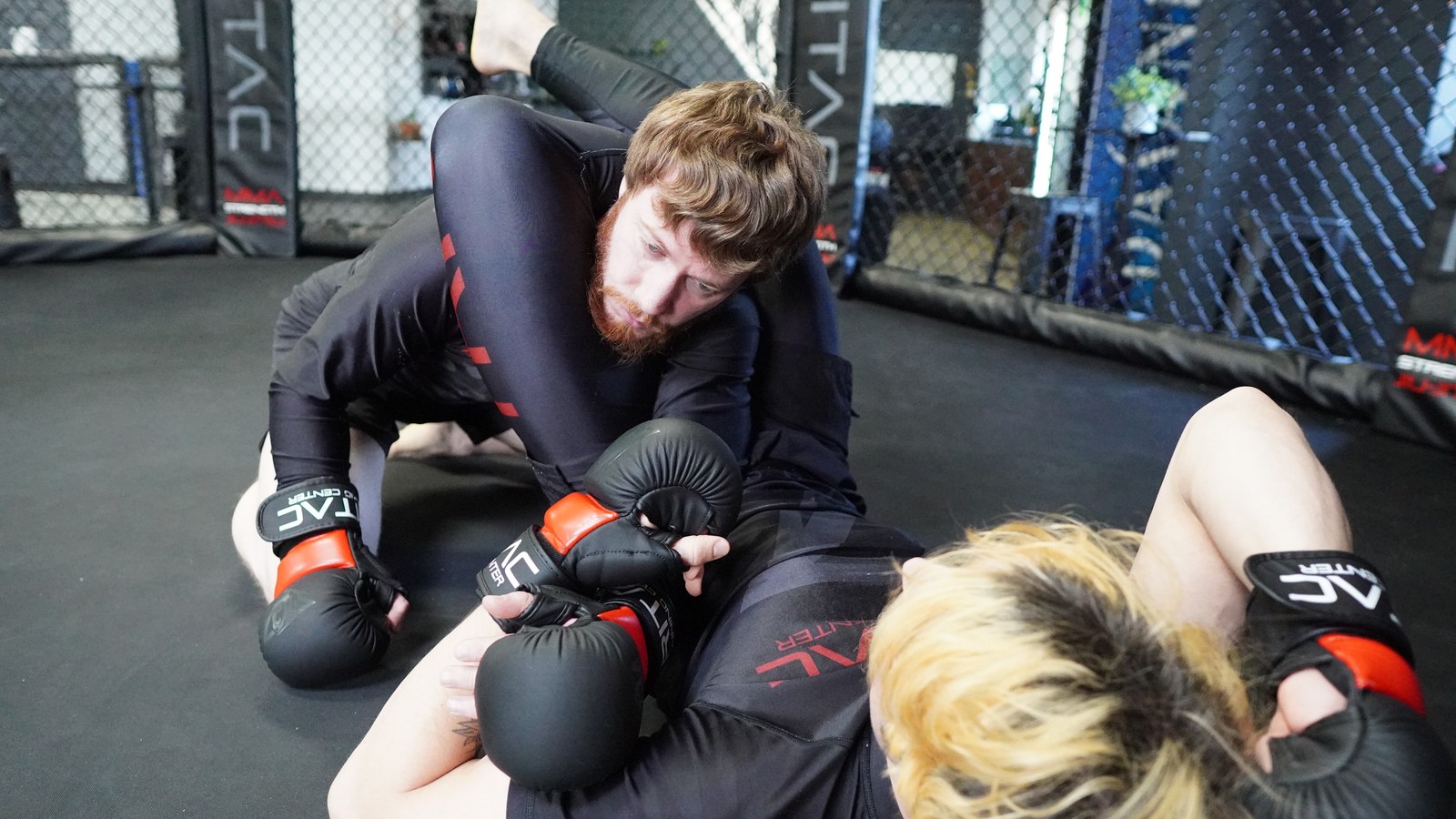
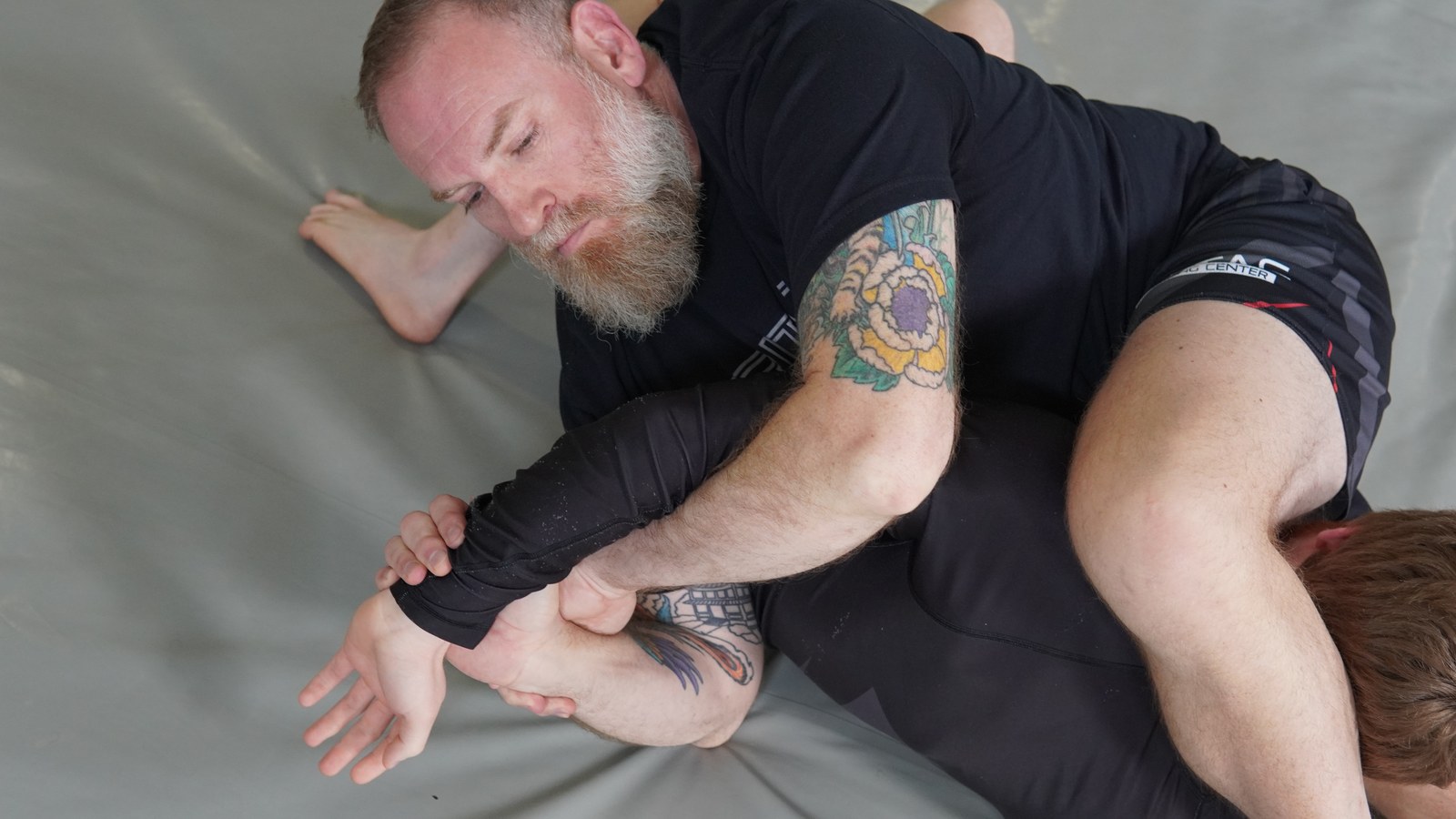
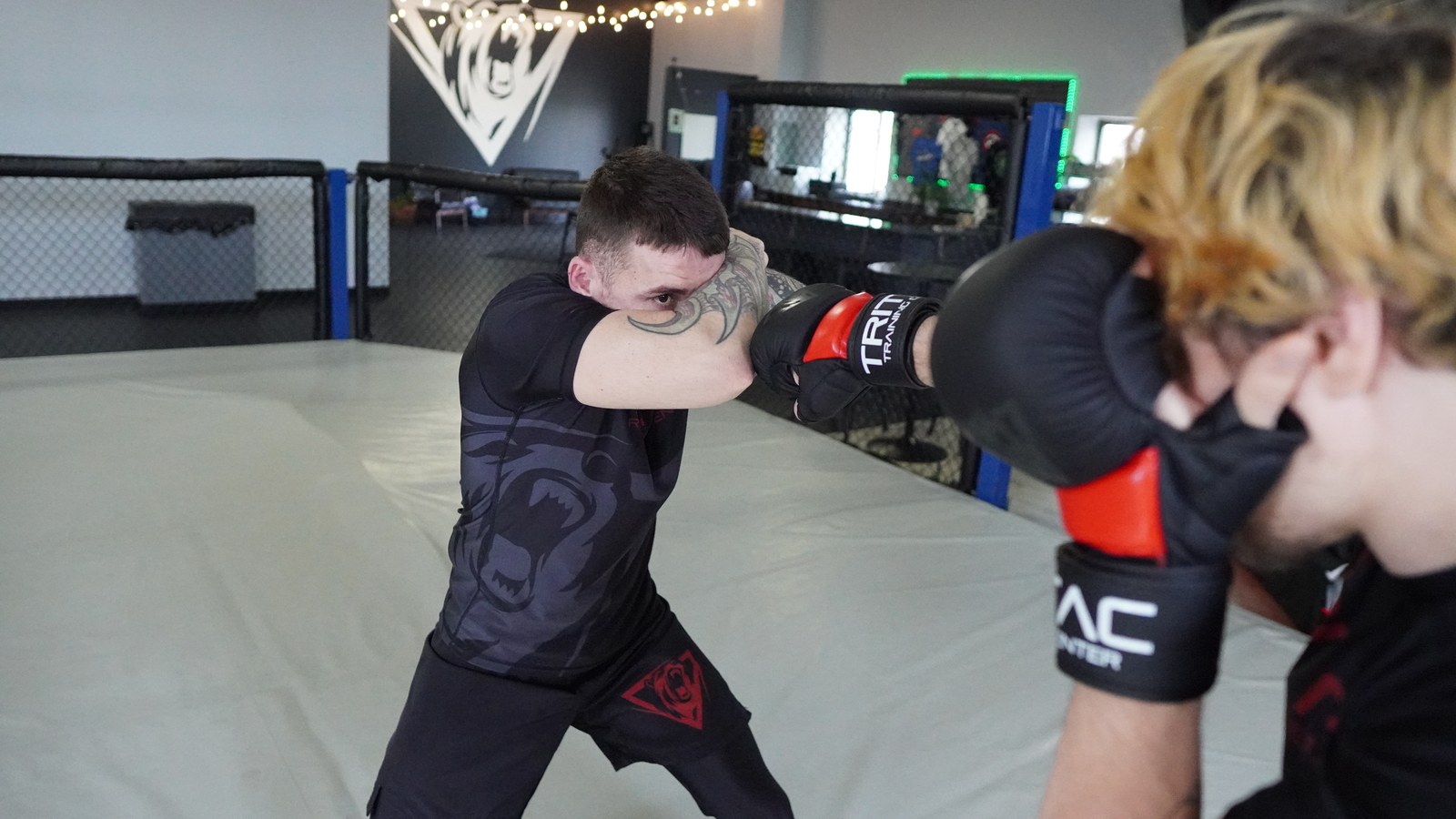
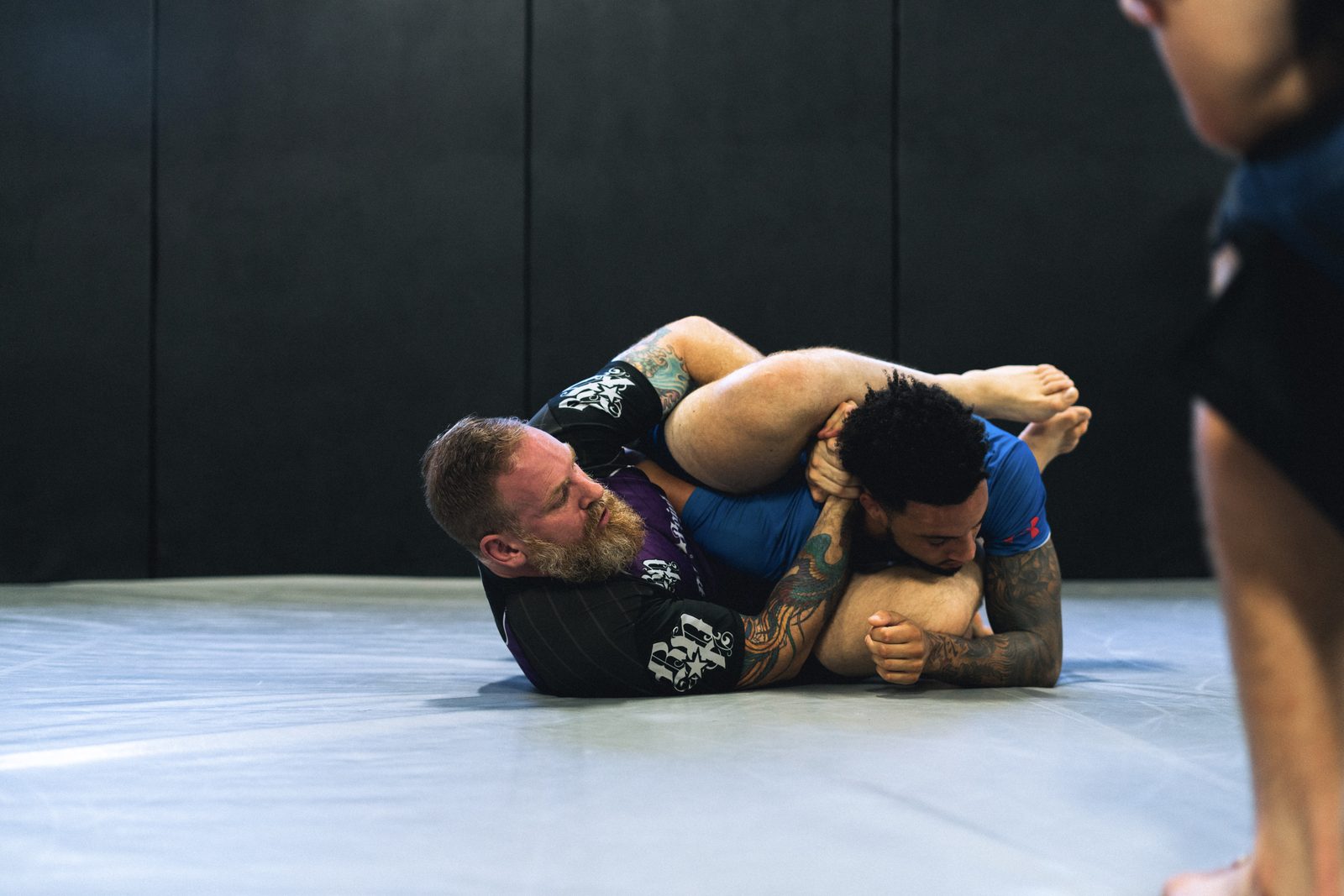
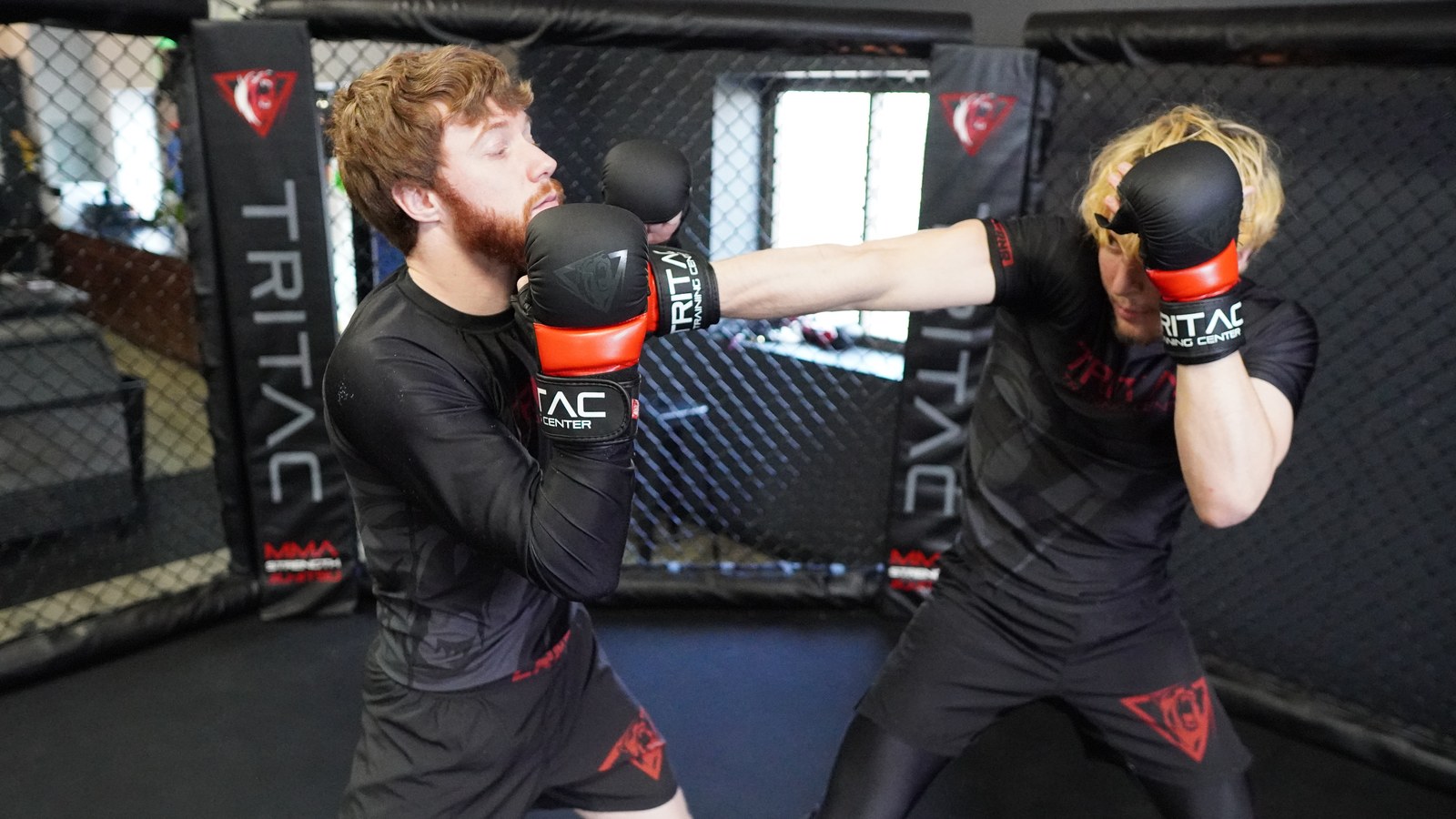
Striking, clinch, takedown, ground. Four ranges. One fight. In most schools they are four classes, four coaches, four schedules. In TRITAC they are four sections of one map. The transitions between them get the same care as the positions inside them.
Range to range says a punch and a takedown live on the same surface. The footwork that lets you slip a hook is the same footwork that lets you change levels for a single leg. The frame that defends a clinch is the same frame that recovers under a punch on the way to it. A student trained range to range stops thinking of disciplines and starts thinking of distance.
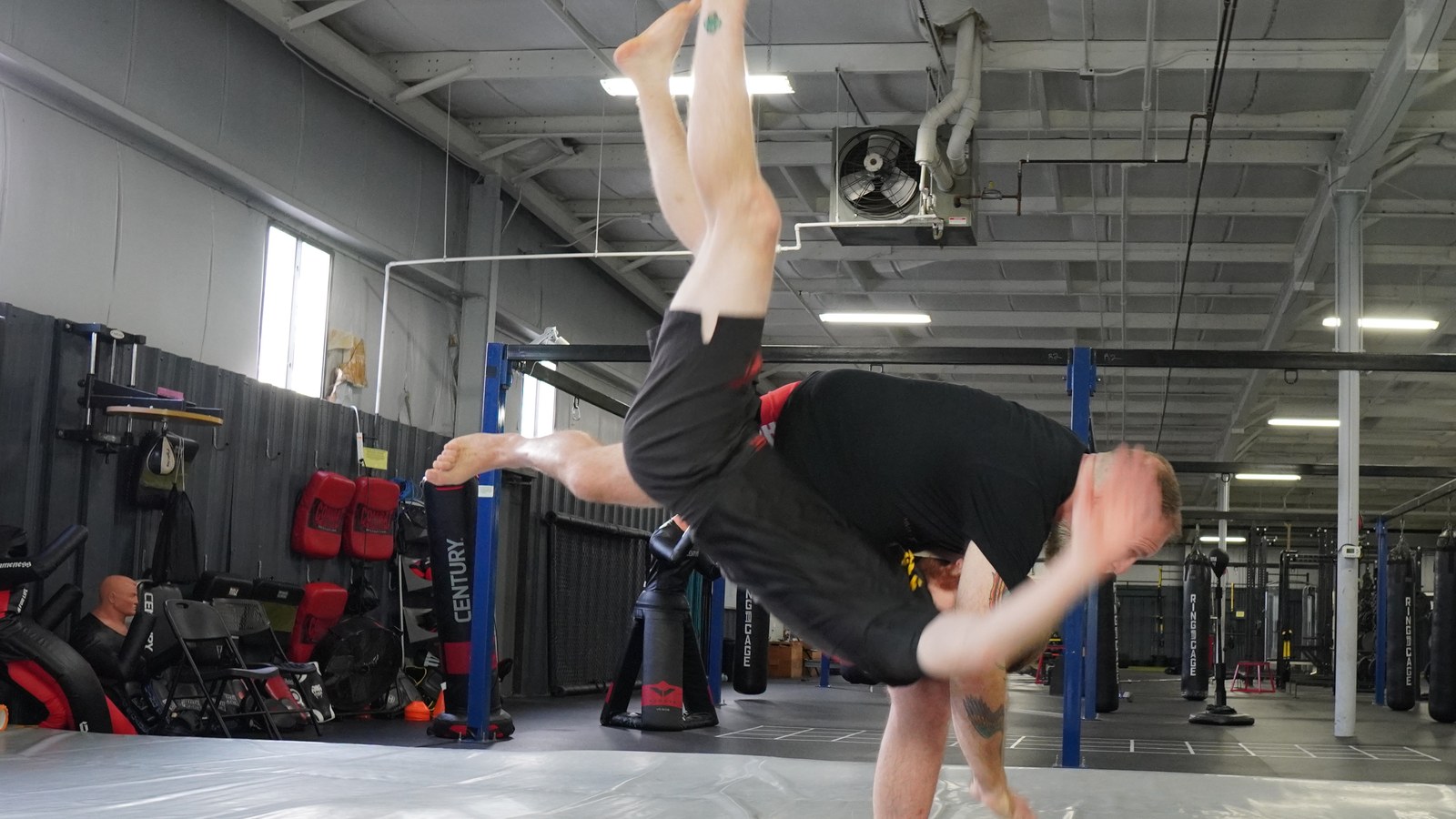
Transitions are the discipline most schools omit. Closing distance gets taught as a striking concept by the striking coach and a takedown concept by the wrestling coach. The two versions do not get reconciled. Opening distance gets one drill on Saturday. Inside a TRITAC session a transition gets the same attention a position gets. How you arrive at the clinch. How you leave it on your terms. How an exit from the ground becomes a stand up. A real transition has steps. The teaching order belongs to the system, not the coach.
A boxer who has not grappled hears "clinch" and pictures Muay Thai. A wrestler hears it and pictures an underhook. A jiu-jitsu player hears it and pictures a collar tie. Inside TRITAC the clinch is a position on the map with named entries from striking and named exits to the ground. The boxer's clinch knows the wrestler's underhook and the grappler's collar tie. Different coordinates of the same place.
Range to range forces honesty about distance. Most martial arts vocabularies are vague about it. Karate calls it ma ai. Boxing calls it range. TRITAC quantizes distance into four working categories. Long, mid, clinch, ground. The four words behave the same way every week. A student in Cromwell on Tuesday and a remote member on Wednesday can talk about what happened.
Old to new
What looks like a new sport is older arts repurposed under one frame. Boxing. Jiu-jitsu. Judo. Wrestling. Kyokushin. Kobukai. Each carries a hundred years of work. The temptation, watching a modern fight, is to read it as a fusion that started in 1993. The honest reading is older. A right hand from a karate stance is still a karate right hand. A double leg from a wrestler is still a wrestler's double leg. The frame is new. The contents are old.
A system that takes old to new seriously refuses to launder the lineage. TRITAC keeps it attached because the lineage carries the logic. A boxing jab and a karate kizami zuki are not the same punch. They feel different to anyone who has thrown both. The differences are decisions about distance, stance, hip use, and recovery, made by coaches over decades. A system that knows where a technique comes from can teach why the technique behaves the way it does.
The student gets the old version and the new version. They train the source on its own when it is the right tool. They train the modern composite when the situation needs it. They are a practitioner of the connected version with the lineage still legible underneath.
TRITAC carries the lineage because the founders carry it. Matt trained Kobukai for two and a half decades under a working sensei. He trained Kyokushin extensively under his first sensei, Shihan Fujiwara. He trained Brazilian jiu-jitsu through a long line of coaches and competitors. The founding collective brought NYPD boxing, wrestling, and law enforcement edges to the mat. If the system you teach is built on older arts, the older arts get named.
A school that flattens everything into MMA terminology hides the source of every drill. A student who learns the wrestling double leg knows the shot lives inside a ruleset that values control over damage. The same shot behaves differently in a fight that allows knees on the way in.
Local to network
The third layer is the smallest in description and the largest in implication. A school used to be a building. A student used to be someone who could drive to it. TRITAC is a building in Cromwell, Connecticut, and a network of members training in basements and garages far from it. The local to network layer is what lets a remote member be a real member.
The same map drives both. A member in Texas opens her Tuesday mission. The mission is computed from the same map the Cromwell floor is teaching that week. The remote member does not get a watered down hobby version. She gets the system, paced for solo work, with the same vocabulary the in person students use. When she visits the building for the first time, she speaks the language. The coach on the floor starts her at where the map says she is.
This is the layer that lets the system grow without losing fidelity. The building has finite mat space. The map does not.
DEFENSE IS A LAYER,
NOT A UNIT.
Defense in most schools is a topic. It gets a Saturday slot, a February block, a guest seminar. A student picks up offense in their nervous system and defense as a memorized list. Under pressure, the offense fires and the defense lags. TRITAC builds the system the other way. Defense is a layer woven through every range, taught from day one, drilled inside every session.
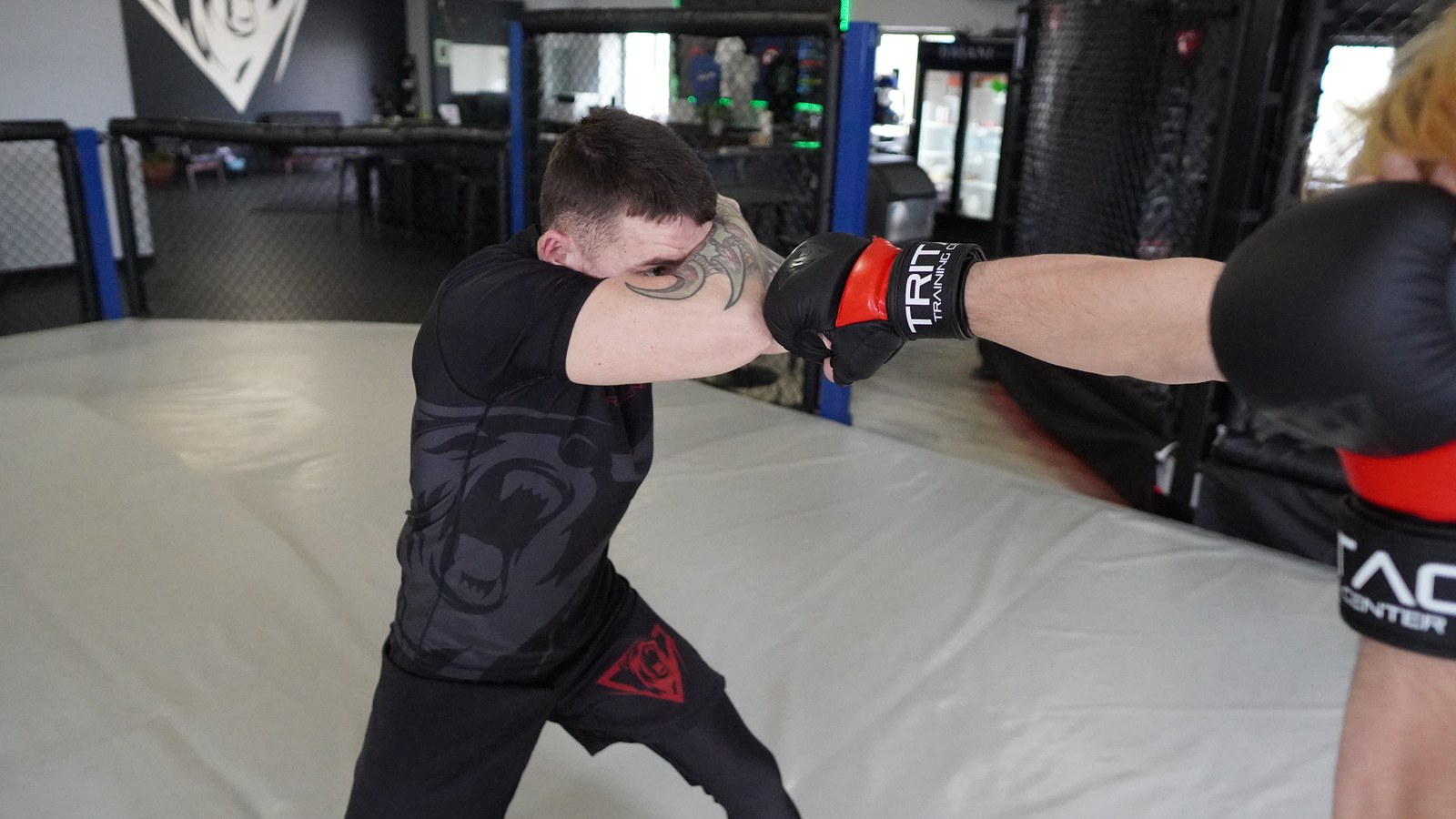
The first rule is integration. Defense is not its own curriculum. A student learning the jab learns the recovery in the same lesson. Where the lead hand goes on the way back. Where the chin sits. What the rear hand is protecting. There is no class called "jab defense." There is a way to throw the jab that contains its defense. The same logic runs through clinch, takedown, ground. Posture defends the takedown while it is being set up. The frame defends the underhook while the hands are still working. The hip escape defends the mount while the legs are still recovering.
The second rule is that counters come from defense. In most curricula, counters get taught alongside the strike. The boxer learns a hook and the counter to a hook. TRITAC draws the relationship the other way. A counter is what a defense becomes when the defender takes the initiative. You do not counter a strike. You defend the strike, and the defense, executed cleanly, becomes a counter. The slip is the defense. The right hand that follows is the counter the slip set up. The level change is the defense against the lead hook. The reactive takedown that follows is the counter the level change set up. Defense first, counter second.
The reason the order matters is what happens under fatigue. A counter taught as an offensive cousin tries to fire when the student decides to throw it. A counter that grew out of a defense fires when the defense fires. A tired student can still defend. A tired student cannot still decide. Counters from defense survive the third minute of a hard round. Counters as cousins work in the first minute and disappear after.
The third rule is frame switching. When a student counters from a defense, the counter does not return on the same frame the defense lived on. Defense high, counter low. Defense inside, counter outside. Defense head movement, counter off the feet. Frame switching forces the counter from a place the opponent is not still defending. Same frame counters are the most common error in striking exchanges. A student trained on this rule cannot, after a year, throw a same frame counter without their body objecting.
The fourth rule concerns direction. Direction in most striking curricula lives on the technique. A hook. A hook to the body. An angled hook. A hook off a pivot. The variants multiply. TRITAC handles direction on a separate layer. Direction lives on the footwork. A jab is a jab. Where the feet take it is the footwork. The student learns footwork separately, drills it separately, then composes it with the strikes they own. The defense becomes flexible without inflating the catalog of named defenses.
A student memorizes a small set of strikes, a small set of defenses, a small set of footwork patterns. They compose them. The compositions get tested in flows and drills. The student gets choice in the moment instead of recall. Choice in the moment is what fluency looks like.
The defense layer is not optional. Offense without defense is a hobby. Offense built on top of defense is a craft.
THE SYSTEM CUSTOMIZES TO THE PERSON,
THE GOAL, AND THE EXPERIENCE.
A real system has to behave one way for the entire field and another way for the person in front of it. The map is fixed. The slice a member trains is not. TRITAC customizes. The verb is mechanical, not promotional.
It starts with a quiz. The quiz reads who the member is and what they want. A few questions about background. A few about goals. A few about how they want to fight and defend themselves. A few about what hurts and what does not. The questions are short on purpose. A long quiz selects for patience, not honesty. The output is a training shape. The shape is the system's word for the slice of the map this person will work inside for the next six weeks.
The shape is not a label handed back to the member. It is the literal slice of the map the system will train them on. Which techniques their daily missions draw from. Which videos they see. Which flows their weekly sessions sit inside. Which defenses get drilled first. The system reads the combination of answers, not any one of them.
Customization happens on three axes. The three matter together.
The first axis is the person. A former wrestler gets a shape that respects their existing offense and pushes the striking and ground layers. A new student gets a shape that builds the basics on every layer at a pace that does not overwhelm. A member recovering from injury gets a shape that routes around what their body is not ready for.
The second axis is the goal. A member who wants to compete in MMA gets a shape that pushes the connected layers and the transitions hardest. A member who wants to defend themselves in a parking lot gets a shape that pushes the early range defenses. A member who wants to train jiu-jitsu well and cares less about striking gets a shape that holds the striking layer light. The grappling layers push deeper.
The third axis is the experience. Week one of a six week cycle looks different from week four. A new member's week one looks different from a returning member's. A member who trained six weeks of grappling and is pushing into striking gets a week one that respects the grappling they own. The striking ramps from the right entry point.
The three axes compose. Two members can share the same goal and the same starting experience and still get different shapes. A goal is what they want. A person is who they are. An experience is where they are. The system reshapes around the intersection of the three.
The reshape is mechanical. No editor in the back room hand assembles each plan. The map gets queried. The shape gets computed. The daily mission is assembled from techniques inside the shape, weighted by what the member has trained recently. Defense is built in. The same engine runs for every member and returns a different session. A coach with eighty members cannot do this. A system can.
The member sees the day's mission, the videos curated for this week, the flow they are inside. They do not see the engine. The TRITAC version hides the engine and shows the work.
Six weeks in, the system asks the member to re quiz. The answers are different. Six weeks of training changes how a member thinks about who they are and what they want. The shape updates. A static shape ages the same way a static curriculum ages.
The customization stops at the edge of what the system has earned the right to claim. It does not promise to know the member better than she knows herself. It reads what she said and assembles her next session from the part of the map that fits.
PROGRESSION IS PER NODE,
IN SIX WEEK CYCLES, ON A VISIBLE MAP.
Most schools measure progression with a colored belt. The belt is a summary. It does not tell a student what they are good at. It does not tell them what they are not. It does not tell a coach which technique to drill next. A belt averages a student into a label. A system with a map does not need to average.
TRITAC tracks progression per node. Every technique on the map carries its own training history for every member. The history is the sum of the work the member has done on that technique. Drills completed. Flows walked. Live reps inside the gym. Daily missions finished. Each contribution adds to the technique's score for that member. The score is not a public ranking. It is a private working number. Visible to the member. Visible to the coach. Not visible to anyone else.
Per node progression works because the map exists. A school with no map can only track time on the floor and attendance. A school with a map can track which nodes the time was spent on. If the map has a node for jab, the system tracks jab. If the map has a node for posture inside a closed guard, the system tracks posture inside a closed guard. Granularity is the signal that lets a coach see the shape of a member's training.
Progression runs on six week cycles. A cycle is long enough to develop something and short enough to course correct if the work is not landing. The early weeks push the new techniques. The middle weeks consolidate. The late weeks pressure test under more resistance. The end of the cycle is the re quiz. The next cycle starts with the updated shape.
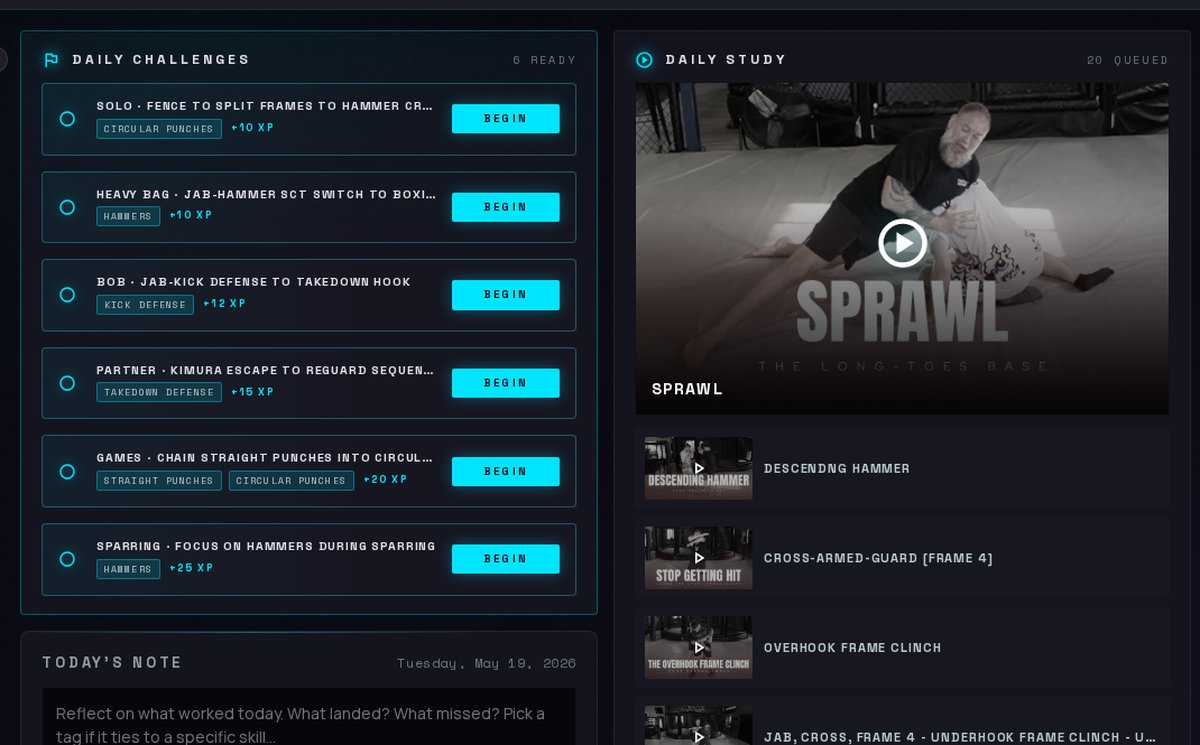
A daily mission engine sits underneath the cycle. It assembles a session every day, for every member, from inside their current shape. The session is unique to the day and to the member. The inputs are the shape, the cycle position, the techniques trained, the techniques not. Defense rules sit on top. The output is a session a member can train solo in ten or twenty minutes, or with a partner during open mat.
Progression is visible because the map is visible. A member sees which nodes they have worked. Which they have not. Which they are stronger on. Which are weaker. The coach sees the same thing. Not a ladder of belt colors. A heat map of the actual techniques. Progression looks like a member's slice of the map filling in over months and years.
A coach using the map for a private session reads the gaps. The lead hand work is light. The grappling exits from the clinch are full. The defensive footwork on the back foot is full and on the lead foot is empty. The session writes itself.
The trade off is honest. A member who wants a credential will not find one here. A member who wants to know how good they are getting will find it.
THE HUB IS THE
BETWEEN SESSIONS COMPANION.
The Hub is the part of TRITAC that lives on a phone. Mat work is the product. The Hub is what keeps a member sharp between mat sessions. It opens to the day's mission. It surfaces the short videos for the techniques the member is training this week, pulled from a library of over four hundred mapped clips. It tracks the work the member has done and feeds the map. A member who opens the Hub on a Tuesday morning sees a session built for that Tuesday. They train it on a mat in their basement, or they save it for open mat at the building. The Hub is the surface. The system sits behind it. The split matters because the gym is the product and the Hub is the way the system reaches the member when the gym is closed. A member who trains only at the building still gets the system because the building runs on the same map. A member who trains only on the Hub gets the system because the Hub reads the same map the building does.
TWENTY FIVE YEARS OF WORK,
IN SIX CHAPTERS.
The system is the output of a long arc. Six chapters. Not a brand story. Evidence that the system was built slowly, by people doing the work the whole time.
A private group.
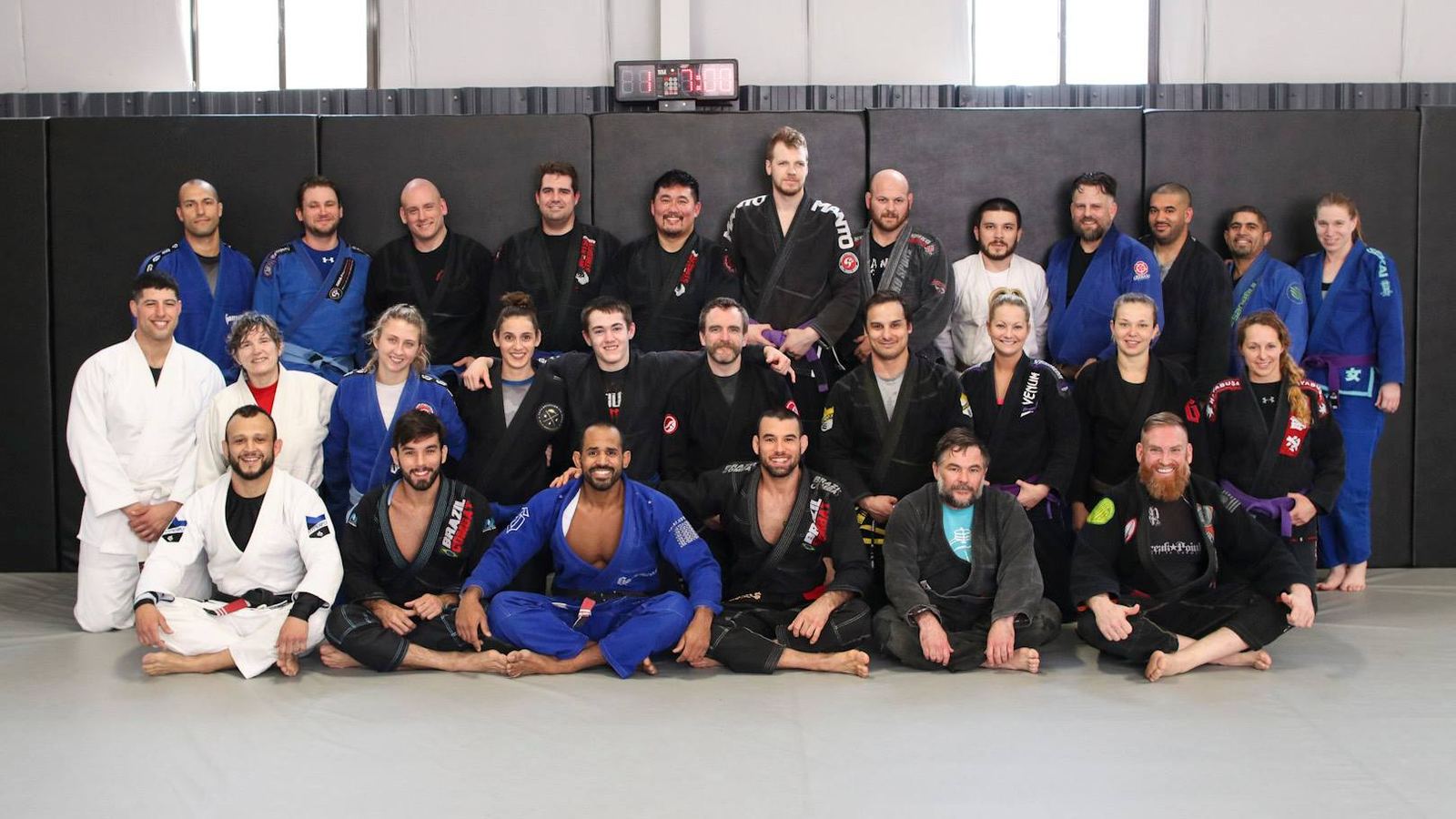
Matt Bryers walks into a Kobukai jujitsu school in Connecticut under Shihan Russ St. Hilaire. He trains Kobukai for the next two and a half decades. He trains Kyokushin extensively under his first sensei, Shihan Fujiwara. He trains Brazilian jiu-jitsu under Luigi Mondelli. He starts a small private training group with Oz Pariser, who was seventeen at the time.
The era matters because of what was missing. No app. No library of every black belt's instructional. No fight breakdown on a phone. A new technique reached the basement because someone trained at a seminar and brought it home. A correction reached a student because a senior partner saw the rep and called it. By the time TRITAC had a name, the eye had a decade of corrections in it.
A name for what was already happening.
Matt, John Leabo, and Mike Simon name the collective TRITAC. The naming recognizes that the work had been a coherent thing for years. John brings boxing for the NYPD, Defense Lab, and Keysi Fighting Method at black belt level. Mike brings BJJ, wrestling, and the same Defense Lab and Keysi lineages. The collective had been considering bringing what they built into a larger martial arts brand. The terms did not fit. They walked. The decision cost years of slower growth and bought the right to draw the map the way the work needed it drawn.
A building of our own.
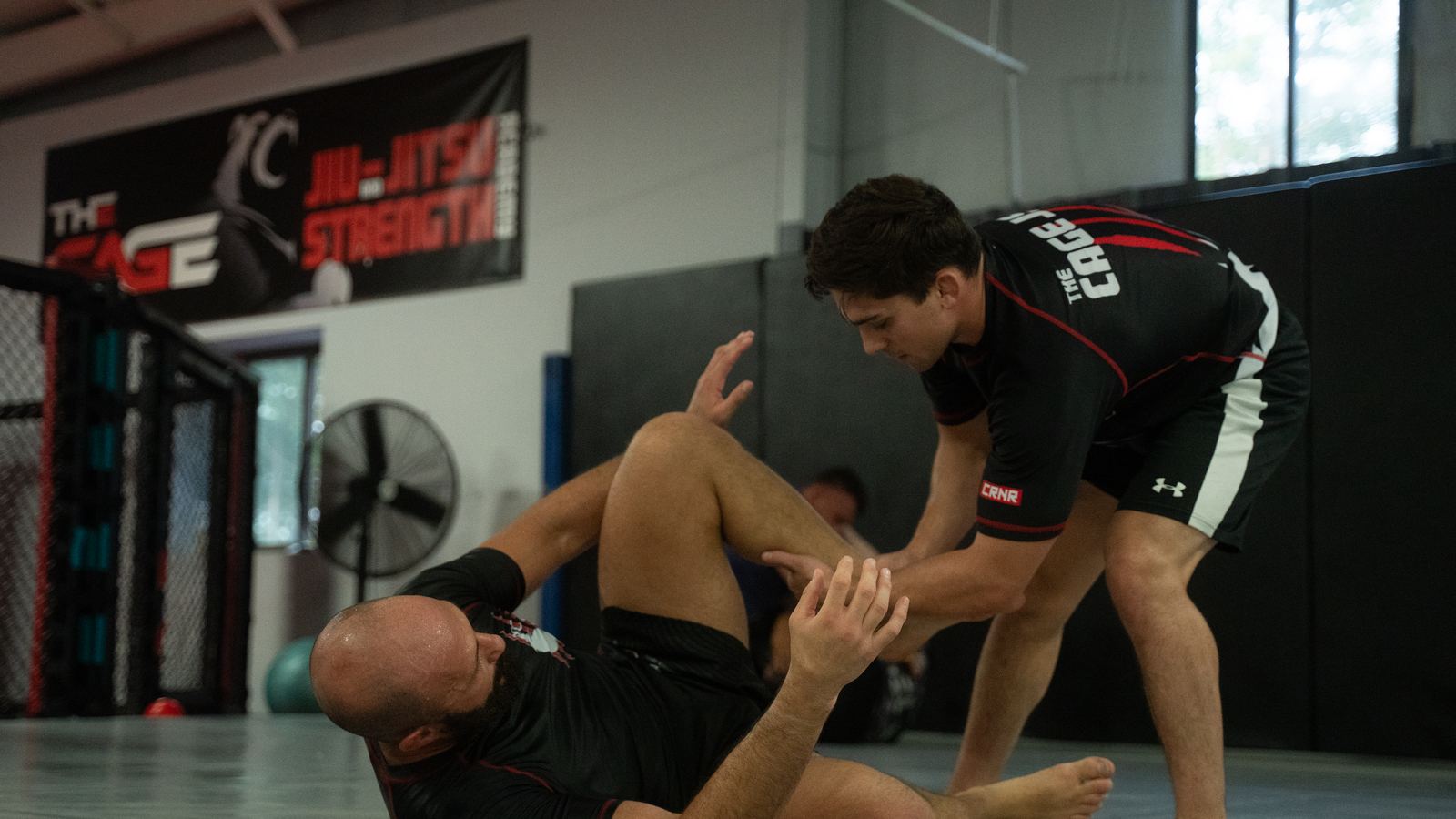
The Cromwell training center opens as a merger of Matt's school, the Jiu-Jitsu and Strength Academy, with his partner's school, The Cage. The combined building is The Cage JSA. Full mat. Full cage. Full strength floor. A real range to range curriculum needs the standing space, the cage to fight off, and the ground to roll on. All in the same building, every week.
All in.
Matt buys out his partner. The building gets renamed TRITAC Training Center. Going full time commits the building to the system as the product. Classes. Curriculum. Coaching staff. Open mats. Strength floor. The collective stops being a YouTube channel with a building attached and becomes a building running the collective's method as its full curriculum.
The first attempt at a brain. Shelved.
A first try at the Hub gets built on a low code platform. It works enough to be used and not enough to be the system. The tools of the moment, in particular the AI pieces, cannot do what the system needs. We ship it. We watch. We shelve it.
The shelved build was tuition. We learned that a map drawn for a single coach is different from a map drawn for a thousand members to train inside. We learned the relationships between techniques needed to be small in number and clean in definition. We learned customization had to be mechanical because hand assembly does not scale.
The build, in earnest.
The current Hub, the map, the flow builder, and the daily mission engine all begin in earnest. The tools have caught up. The methodology that had been a teaching practice for two decades can now be a system members train inside every day. The first launch runs against the spring of 2026. The page you are reading is the public account of the system that build produced.